
By Instacool News Desk | October 24, 2026
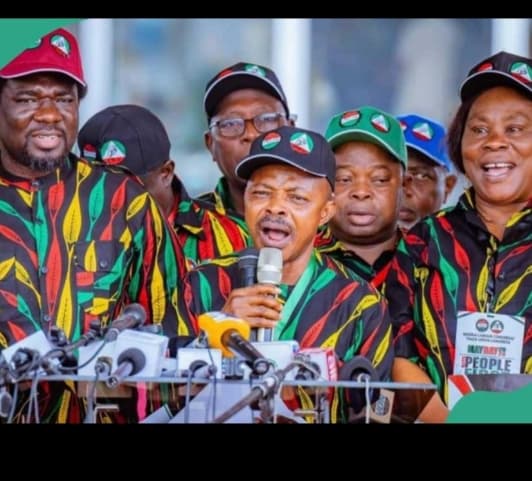
The Nigeria Labour Congress (NLC) has extended its deadline to the Federal Government until Tuesday, October 27, demanding action on petrol prices, minimum wage negotiations and outstanding welfare issues affecting Nigerian workers.
The warning followed a meeting between NLC representatives and the Federal Government in Abuja on Thursday, October 22. The discussions ended without an agreement, prompting the labour union to prepare for possible nationwide industrial action if the next round of negotiations fails.
According to a report by TheCable, the NLC had initially issued a two-week ultimatum on October 8. That deadline expired on October 22 without the union securing the commitments it wanted from the government.
The union says its next move will depend on the outcome of the rescheduled meeting.
What Is the NLC Demanding?
The NLC has outlined several demands it wants the Federal Government to address.
1. Reduction in petrol prices
The union is calling for petrol prices to return to their 2024 levels, arguing that rising fuel costs continue to place pressure on workers and households.
Fuel prices affect transportation, food distribution, electricity generation and the operating costs of many small businesses. Any sustained increase can therefore have consequences beyond the cost of filling a vehicle's tank.
2. Renegotiation of the minimum wage
The union also wants a renegotiation of the national minimum wage amid concerns about workers' purchasing power and the rising cost of living.
Nigeria's minimum wage was raised from ₦30,000 to ₦70,000 under the National Minimum Wage Act of 2024. The NLC is now seeking further engagement with the government over wages and the economic pressures facing workers.
3. Implementation of tax relief measures
Labour is demanding the implementation of agreed tax relief measures, which it says should form part of the response to the financial difficulties facing Nigerian workers.
4. Outstanding allowances and health-sector agreements
The NLC is also pressing for the implementation of outstanding agreements affecting public-sector employees, including issues involving the Joint Health Sector Unions and the Joint Public Service Negotiating Council.
These issues include peculiar allowances, wage awards and hazard allowances.
Why Did the Negotiations Fail?
The NLC's Acting General Secretary, Benson Upah, said the government delegation arrived without the authority required to negotiate substantively on the outstanding issues.
The union said the meeting ended without concrete commitments and that the government requested an adjournment until October 27.
The next meeting is expected to provide an opportunity for relevant ministers and heads of departments and agencies to participate in the negotiations.
The NLC has said it remains open to dialogue but does not want the process to become an indefinite delay in resolving workers' concerns.
Is a Nationwide Strike Certain?
No. As of October 24, the NLC has warned of possible industrial action, but a nationwide strike has not been confirmed.
The union said its relevant organs would decide on the next course of action if the October 27 meeting fails to produce meaningful progress. Its affiliates, state councils and civil society allies have reportedly been urged to prepare for possible mobilisation.
The distinction is important: the deadline is an opportunity for negotiations, and the union's subsequent decision will determine whether industrial action proceeds.
The NLC's position should also be distinguished from that of the Trade Union Congress (TUC). In a separate clarification published on October 23, the NLC said the TUC itself did not participate in the October 22 talks or issue an ultimatum over that meeting, although representatives of other public-sector and health-sector bodies attended.
What Could This Mean for Nigerians?
If negotiations fail and the NLC authorises industrial action, the effects could extend to public services, government offices and other sectors where affiliated unions participate.
For ordinary Nigerians, the dispute centres on a familiar economic problem: the relationship between wages and the cost of living. Workers are seeking improved purchasing power and relief from fuel-related expenses, while the government must respond to the demands through negotiations and its wider economic policies.
The outcome of Tuesday's meeting will be significant in determining whether the dispute moves towards a settlement or escalates into a wider labour confrontation.
For now, workers and members of the public should await an official announcement from the NLC rather than assume that a strike has already been declared.
Sources: TheCable: NLC extends FG ultimatum to October 27 | Punch Newspapers: Labour gives FG Tuesday to resolve wage and fuel-price demands | Punch Newspapers: NLC clarifies TUC's participation




0 Comments