
By Instacool News Desk | October 24, 2026
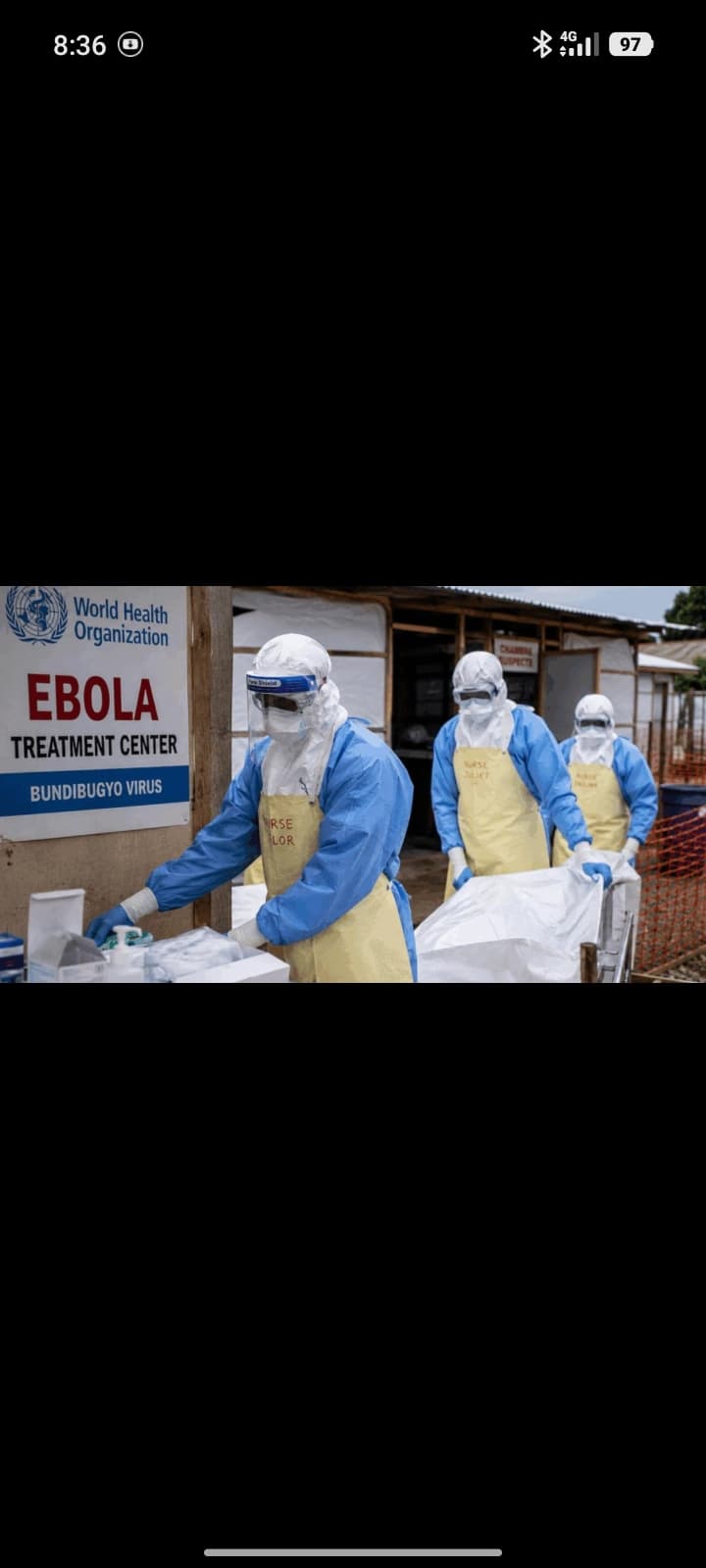
The Federal Government has ordered tighter enforcement of Ebola screening procedures at Nigeria’s entry points following concerns about reported breaches of public-health protocols, as investigators work to establish the origin of the country’s confirmed case.
The development comes after genomic analysis found that the Ebola virus detected in Nigeria was closely related to the virus identified in Kenya’s index case. However, health authorities have cautioned that the genetic similarity does not prove that the two patients were directly connected.
According to the Federal Ministry of Information and National Orientation, the Nigeria Centre for Disease Control and Prevention (NCDC) and researchers at the Institute of Genomics and Global Health at Redeemer’s University, Ede, Osun State, conducted the analysis.
Coordinating Minister of Health and Social Welfare, Professor Muhammad Ali Pate, said further investigations were necessary to determine whether the cases were epidemiologically linked.
Government Raises Concerns Over Screening Procedures
In a separate development, the Federal Government has raised concerns about reported non-compliance with Ebola screening procedures at Nigeria’s points of entry.
A report by Punch Newspapers on Saturday said the Office of the National Security Adviser had raised the alarm, prompting instructions for relevant security agencies, health institutions and other authorities to strengthen surveillance and ensure compliance.
The Ministry of Health and Social Welfare has reportedly directed relevant agencies to document and report actual or attempted breaches of the established protocols.
The measures are intended to improve early detection and reduce the risk of further transmission.
Confirmed Case Remains Under Medical Care
The World Health Organization (WHO) confirmed on October 20 that Nigeria had recorded one imported case of Ebola Bundibugyo virus disease in the Federal Capital Territory.
The patient, a woman who had recently travelled from Uganda, was receiving medical care in isolation after laboratory tests confirmed the infection.
According to the WHO, the woman developed symptoms on October 7 and sought treatment at a private health facility in Abuja on October 11. The diagnosis was confirmed on October 20.
Uganda’s Ministry of Health subsequently said the traveller had not displayed symptoms when she departed the country. Investigations are continuing to establish when her symptoms began and how the infection occurred.
At the time of the WHO’s initial announcement, Nigerian authorities had identified 44 contacts for monitoring.
What the Genetic Link to Kenya Means
The genetic relationship between the viruses detected in Nigeria and Kenya provides investigators with useful scientific evidence, but it does not independently establish the route of infection.
Authorities have said there is currently no evidence that Kenya’s index patient travelled to Nigeria or had a direct connection with the Nigerian patient.
Investigators will need additional epidemiological information, including travel histories and potential exposure events, to determine how the infections may be related.
The government has also said that some identified contacts have tested negative, while results for others remain pending.
WHO Begins Vaccine Trial in the Democratic Republic of Congo
The wider regional outbreak is also receiving international attention.
The WHO announced that it had begun a clinical trial of vaccine candidates against the Bundibugyo strain in the Democratic Republic of Congo. The trial is taking place in Bunia, in the country’s northeastern Ituri province.
The initiative is significant because no vaccine has been approved specifically for the Bundibugyo strain. However, the trial is intended to assess whether candidate vaccines can provide protection; it is not evidence that an effective vaccine is already available for this strain.
What Nigerians Should Know
The Federal Government has urged residents to remain calm, follow official public-health advice and avoid spreading unverified claims.
Healthcare facilities have been instructed to remain alert, promptly identify and report suspected cases, and maintain appropriate infection-prevention measures.
Members of the public should seek information from recognised authorities, including the NCDC, the Federal Ministry of Health and Social Welfare, the WHO and Africa CDC.
The situation remains under investigation. The number of confirmed cases, contact-tracing results and any new developments should be checked against subsequent official updates before being reported as final.
Sources: Federal Ministry of Information and National Orientation | World Health Organization | Punch Newspapers




0 Comments